
Organisatie
Leer de facultaire kandidaten van de Faculeits- en Universiteitsraad kennen
From 18 to 21 May 2026, elections will be held for the student and staff positions of the University Council. There are also mid-term elections for the staff positions of the Faculty of Archaeology. You will receive an email with a link to the voting page on Monday the 18th.
Below you will find our colleagues who are running for candidacy for the Faculty Council and the University Council.
Candidates for the Faculty Council
Tullio Abruzzese

I am a PhD candidate in Palaeolithic Archaeology, and I would like to contribute to the Faculty Council to help strengthen the academic and social environment within our faculty. Over the course of my years in our Faculty, both as a student and as PhD, I have become increasingly aware of how important clear communication, supportive working conditions, and a sense of community are for both research quality and well-being.
My main priorities are improving PhD safety and working conditions, fostering greater transparency in decision-making processes, and supporting initiatives that build a stronger and more inclusive faculty community. I am also committed to promoting open-science practices, as I believe they are essential for making our research more accessible, collaborative, and impactful.
I see the Faculty Council as a space for dialogue and constructive collaboration. I aim to listen carefully to the concerns of colleagues, represent them thoughtfully, and contribute to practical, balanced solutions that benefit the wider faculty.
Dennis Braekmans

My goal as a faculty council member is to serve as a pragmatic and constructive voice, and to contribute to ensuring that our faculty remains an environment where every member of our community finds the ideal conditions to thrive.
A focus would be to identify and integrate diverse perspectives from across all departments into the faculty’s decision-making process and act as a bridge between high-level policy and the daily reality of our research and teaching environment.
Streamlined processes, enhanced student experience and a consolidation of research infrastructure are therefore key to maintain and strengthen. An interest is also to contribute to think on sustainable growth and long-term planning, aiming for lasting value.
I am looking forward to contributing to a resilient and future-proof faculty!
Eric Dullaart

My name is Eric Dullaart. I live in Berkel en Rodenrijs and have worked at the Faculty of Archaeology for 25 years.
I have seen many things change for the better during that time, and I am, and will remain, happy to be part of those changes.
Now, I would also like to see more influence from the support staff in the board's decisions, and that is why I have put myself forward as a candidate!
Bleda Düring

Recently the Faculty of Archaeology staff has developed a series of guiding principles, including that of implementing changes by working through co-creation and achieving our goals through continuous dialogue. While these are laudable principles that we should all embrace, it is likely that in practice these guiding principles will often be difficult to achieve given time constraints in our Faculty and policies and decisions taken at the university level. It is precisely to give voice to the concerns and priorities of the wider faculty community – rather than those of our management – that the Faculty Council exists. As a long-term member of the Faculty of Archaeology and a former board member (with an understanding of how management at our university works) I am well placed to represent the concerns of my colleagues. I look forward to represent you, work with the other members of the council and to help make our Faculty even better.
Jakub Senesi

When the call for Faculty Council applications arrived in my inbox, I had to admit to myself that I barely knew what the Faculty Council was. As a PhD candidate who joined the Faculty of Archaeology about six months ago, the faculty level of university governance had barely entered my radar. I would like to change that by being a genuine point of contact. Someone who brings faculty-level conversations closer to both staff members and self-funded and external PhDs.
I believe that faculty decision-making should not feel like a distant, abstract process but something that happens in continuous conversation with everyone interested in joining the discussion. For that to happen, I would like to focus on establishing clearer and more regular communication channels between the council and faculty members. My priority would be a faculty with more dialogue across its levels and an environment where decisions feel more like a result of a shared discussion.
Candidates for the University Council
Tullio Abruzzese
As part of the PhDoc party, I believe universities function best when decision-making is transparent, academic communities are inclusive and diverse, and young researchers feel properly supported.
As a PhD candidate, I am particularly interested in advocating for safer, healthier, and more inclusive working conditions, clearer communication between governance bodies and the university community, and stronger support networks.
Through the University Council, I hope to contribute to constructive dialogue at the university-wide level and help ensure that the perspectives of early-career researchers are meaningfully represented in institutional discussions and policies.
Gerrit Dusseldorp
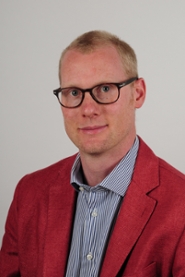
I am an Associate Professor in Stone Age archaeology. My research focuses on southern African archaeology and my experiences living there as a post-doctoral researcher have also been instrumental in opening my eyes to the importance of getting involved in university policy. I want to contribute to a better-functioning university with more transparancy in decision-making both centrally and at the Faculty level. I am committed to transforming the academic community to be more inclusive, starting with a decreasing emphasis on the Dutch language as the policy language at our institution.
Further I am involved in the Leiden University Sustainability and Biodiversity research theme and as such am committed to increasing interfaculty and interdisciplinary coherence at Leiden University and making a meaningul contribution to solving the current environmental crises. Related to this I want to help shape a responsible interpretation of academic freedom, which moves away from the "anything goes" individual approach to research and takes into consideration our societal responsibility in setting up collaborations, accepting funds, etcetera.
Marie Kolbenstetter

Our party, PhDoc, represents the interests of all Leiden PhDs and Postdocs and actively stands up for their rights directly at the central level of Leiden University. Both during my mandate as chair of the Faculty Council at the Faculty of Archaeology (2021-2023) and in my current mandate at the University Council (2024-2026), I have consistently voiced PhD and Postdoc concerns, and stood up for their well-being. This has resulted, among others, in a collaboration on the new PhD regulations that clearly outlines the rights of all Leiden PhDs, and in a successful rejection of the proposed tuition fees for external PhDs. Additionally, I have brought in a PhD, Postdoc and ECR perspective in dossiers across themes: from arbo, social safety, finances, to education. Building on my experience and on the rapport I have established with PhD and postdoc representatives and other parties, I aim to continue to represent this vulnerable part of the university community and pass more resolutions aimed at protecting it during the next two years.
Johan Verweij

Working together to make the university more transparent, more inclusive, and safer for everyone. That is why I want to become a member of the University Council on behalf of the FNV.
I want there to be greater transparency regarding who makes decisions and who is involved in the process. We still have a long way to go in terms of inclusivity and social safety, which is why it is important that every voice is heard.
Since, traditionally, the focus has been primarily on academic staff, I want to make a special effort on behalf of support staff (think of career paths, sabbaticals, and training policies).
Vincent Wolters

In my work, I have long been driven by a question that seems simple, yet is often challenging in practice:
how do we ensure that policies, organisational development and decisions truly work for the people they affect?
Especially in decision-making, it is essential to explicitly consider implementation and the impact on people. By testing policy and organisational development against everyday practice and staff experiences, decisions become better grounded, more workable, and make a greater difference in practice.
This is why it is essential that we look beyond ambition alone, and focus on what is realistic, workable and meaningful in practice.
From this perspective, I am running for the University Council of Universiteit Leiden via the Leiden Academic Community.
I am committed to strengthening the connection between policy, organisational development and daily practice — with attention to workload, social safety, and clear and connecting leadership.
For me, this strongly aligns with what LAG/LAC stands for: a university centred around its community, with more autonomy, trust and collaboration, less bureaucracy and more humanity, and with attention to social, ecological and academic sustainability.
I welcome the opportunity to engage in conversation and would appreciate your support.
Wei Ping Young
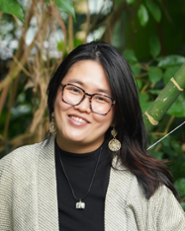
I’m Wei Ping and I am running for the University Council as a representative of the PhDoc party, which defends the interests of the PhD and postdoc community in university policy. As an international PhD candidate with the Department of Archaeological Sciences since late 2025, I am investigating early human use of edible plants, so you may see me out and about foraging.
The Archaeology Faculty community inspires me to find ways of pushing for more collaboration, conversations, and empathy – I seek to channel this energy at the central university level. I feel strongly about addressing the unequal experiences of PhDs, gaps in institutional support, and hope to push for greater accountability from the university as an academic institution in this time of climate crisis, global inequality, and colonial violence. Based on prior work experience relating to policy and research, alongside previous student representative roles outside of Leiden, I am confident in navigating these discussions. Looking forward to your support and future conversations!